
What You Need to Know
A wall-mounted electric fireplace may need a dedicated circuit, depending on the model and load. Florida condo boards must provide written notice before imposing fines and hold dispute hearings within a set period under state law. Flush-mount recessed electric fireplaces typically require approval from 75% of total voting interests under Florida Statutes §718.113 for common-element alterations. The Motion range electric fireplace extends 9.4 inches deep and weighs approximately 124 pounds in the 52-inch model, requiring secure stud mounting. Plug-in electric fireplaces avoid new circuit requirements but still need written HOA approval because mounting brackets create permanent holes in association-owned drywall.
Your Real Choice: Plug-In vs. Built-In
The first decision narrows everything else. A plug-in unit may work with your existing outlet if the circuit isn’t already loaded. A hardwired or built-in unit brings an electrician, permit paperwork, and inspection scheduling into the picture before you close the wall.
Plug-in units are usually the path of least resistance in Tampa condos because they don’t open wall cavities. That doesn’t make them approval-free. Once you fasten a mounting bracket to drywall, you’ve altered a surface the association can regulate.
HOA Approval Checklist for Tampa Condos
Get written approval before you drill anything. Your board needs the product model, electrical ratings, mounting method, dimensions, weight, and installation plan. Give them enough detail to separate a surface-mounted appliance from a recessed wall opening.
Ask your building manager for the written work-hour rules before you schedule the install. Confirm those hours with your association directly. Many condo buildings also limit elevator reservations, contractor parking, hallway protection, and noisy work windows, so handle those logistics in the same planning conversation.
Check whether your installation affects common elements. A recessed unit that opens a wall cavity is a different request from a surface-mounted bracket that uses an existing outlet. Your association’s declaration and architectural guidelines determine how the board treats each option. Read those documents before you buy the fireplace.
Electrical and Mounting Considerations
A wall-mounted fireplace carries real weight on a condo wall. Confirm the mounting surface, stud locations, wall construction, and fastener requirements before installation day. Also confirm with Hillsborough County whether a condo fireplace installation requires a permit. The exemption list doesn’t establish a blanket rule, and the county, your building management, and the licensed electrician all need to agree.
A licensed contractor can coordinate the HOA materials, mounting hardware, electrical work, and inspections without claiming specific services for your project. We handle design, estimating, and permitting under one roof, and we stay involved from the first consultation to the final walkthrough. If you want to talk through the HOA approval process and the wiring plan before you commit, book a free consultation and we can help you understand what your building needs.
Why Electric Fireplaces Make Sense in Tampa Condos
In a Tampa condo, wall-mounted electric fireplaces solve a problem gas and wood alternatives can’t. You get a visual focal point without touching the building’s ventilation system or requesting structural changes. Gas fireplaces need a licensed installer, a gas line, and exhaust routing that crosses common elements in multi-unit buildings. Wood-burning units need a flue and a chimney. Both require HOA board approval for modifications you don’t own, and both trigger permit requirements in Hillsborough County.
Electric units operate differently. They pull power from a standard residential outlet, produce zero emissions at the unit, and mount to the wall surface without altering the building envelope when you choose the simplest format. A plug-in model treats the fireplace more like an appliance. A bracket-mounted model still uses your existing outlet but adds a wall attachment the association may review. A recessed unit is the most invasive option because it changes the wall cavity and usually brings electrical work into the project.
Compact Dimensions and Ordinary Wiring Make Plug-In Models the Starting Point
Shallow electric fireplace profiles let you mount the unit on interior walls where a gas fireplace’s vent pipe would create clearance problems. You don’t need new wiring for a basic plug-in model, but you do need written HOA approval before mounting the bracket. In many condo declarations, interior drywall is treated as a limited common element, which means the wall surface isn’t always yours to modify freely.
When you move beyond plug-in units to recessed installations, the timeline extends. Older condo panels in Tampa buildings from the 1980s and 1990s may not have spare breaker space, which can turn a simple design choice into a building-management discussion. A plug-in wall-mount can often be handled quickly once approval is in hand, while a recessed unit with circuit work can stretch across a longer review process involving architectural approval, electrical permitting, and panel-capacity confirmation. A separate electrical permit may be required for work that adds a new circuit, and your licensed electrician must pull that permit before opening your panel.
The practical condo choice starts with what your panel and your HOA allow, not with the fireplace model itself. Read your governing documents for the approval process before you order anything. If your declaration requires board approval for alterations to limited common elements, the mounting plan belongs in the application.
Electrical Wiring Limits and Circuit Requirements
When you plug a wall-mounted electric fireplace into your condo’s electrical outlet, the math matters because these appliances can run at high draw for long stretches. The National Electrical Code requires continuous loads to be sized with extra capacity rather than right at the appliance’s nameplate demand. A shared living-room circuit can become a problem even when the plug fits and the outlet looks normal. The breaker may trip under sustained load, or wiring can heat up in a way most homeowners never see coming.
In Tampa Bay condos, the confusion often starts with what “dedicated” means. Homeowners see an unused outlet and assume it qualifies. It doesn’t. A dedicated circuit means the breaker in your panel feeds that single outlet and nothing else. Flip the breaker. If your TV, a floor lamp, or anything else goes dark, the circuit is shared. That shared circuit may already be supporting normal room loads before the fireplace ever turns on. Add a high-draw heater, and you’re asking one circuit to do more than it was designed to handle.
Plug-In Units vs. Hardwired Installations
Plug-in models don’t automatically require a new dedicated circuit under the National Electrical Code. In Tampa condos, most builders installed general-purpose circuits in living rooms, bedrooms, and common areas. Those circuits already serve lamps, entertainment centers, and wall outlets for everyday use. Condo owners often plug these units into existing outlets, run them at full heat through a February cold snap, and wonder why the breaker trips every evening. The issue isn’t the fireplace alone. It’s the fireplace combined with everything else on the same branch circuit.
Hardwired or built-in units carry stricter requirements. They need a properly sized branch circuit, installed by a licensed electrician, with a permit filed in Hillsborough County when new wiring is added. The circuit must be in place before drywall closes. Retrofitting wiring after the fact means opening walls, fishing cable, patching, and repainting. The cost difference between rough-in wiring during construction and after-the-fact work is significant.
Manufacturer-Specific Circuit Requirements
Check your fireplace’s installation manual before planning electrical work. Manufacturer specs vary. Some units are designed for ordinary residential voltage, while others offer higher-voltage configurations for greater heat output. These are model-specific requirements, not universal rules you can apply across brands.
We’ve seen condo owners assume a plug means any outlet will work. It doesn’t. Plug-in appliances can still require dedicated circuits because of sustained draw over time. The wire gauge matters as much as the breaker rating. An oversized breaker on undersized wiring creates a mismatch that an inspector will flag immediately because the wire can overheat before the breaker responds.
Before you install, confirm your HOA’s documentation requirements, check whether your panel has available capacity for a new circuit, and verify that your electrician pulls the required permit. Consult a licensed electrician to determine the correct wire gauge for your circuit load and configuration.
Installation, Permits, and Coordination
We handle the coordination between your HOA, your electrician, and your building’s requirements so wall-mounted electric fireplaces clear every checkpoint before installation day. The timeline depends on whether the HOA packet, the circuit capacity, and the mounting surface are confirmed before you order the unit.
Verify the Electrical Baseline Before You Order
A dedicated circuit means the breaker in your panel feeds exactly one outlet and nothing else. Flip the breaker for the outlet where you plan to plug in the fireplace. If anything else in the unit goes dark, the circuit is shared.
A qualified electrician can trace the circuit and tell you whether you have capacity, whether a new circuit is possible, and what that circuit costs. If your condo panel is full and adding a circuit means a panel upgrade, you’ll know before you unbox the fireplace. Some buildings built before 1990 still carry aluminum wiring or Federal Pacific breaker panels that insurance carriers flag during home inspections. An electrician can identify these issues during the initial walk-through and quote the remediation alongside the fireplace circuit. If the fireplace manual specifies hardwired installation only, never improvise a plug conversion. Hardwired units require a dedicated branch circuit, a licensed electrician, and a permit.

Coordinate the HOA Approval and Permit in Parallel
The HOA packet and the electrical evaluation should happen at the same time. That submission needs the fireplace model number, the mounting method, and whether the install touches common elements such as exterior walls or shared electrical infrastructure. Florida law requires 75 percent of voting interests to approve material alterations to common elements.
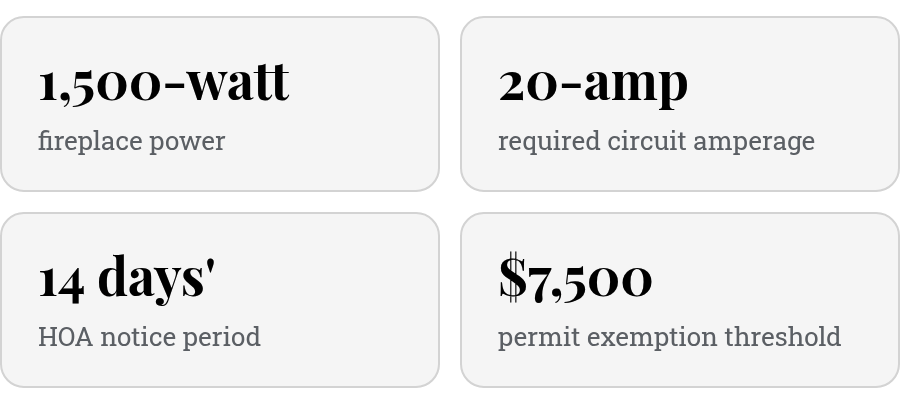
Hillsborough County may require an electrical permit for new circuit work, regardless of project value. Florida House Bill 803 exempts non-structural work under $7,500 from permits, but electrical work is explicitly excluded from that exemption. If the fireplace plugs into an existing outlet and you’re not adding wiring, no permit is needed. If the electrician runs a new circuit, the permit is pulled before the electrician starts. The inspection happens after the wiring is complete and before drywall closes the wall cavity.
A licensed contractor can coordinate the electrician, the HOA submission, the permit timeline, and the final inspection so nothing blocks the next step. One point of contact means fewer handoff issues between the trades and the association.
References
[1] Electric Fireplaces for Apartments & Renters | EcoSmart Fire – https://ecosmartfire.com/blog/electric-fireplaces-for-apartments-renters-no-permit-no-damage-solutions?srsltid=AYCX9vLnVmrfM8vACHQaFM66yd1Yfy8kQKiKOpVkB-05KYJmsY77WOB_
[2] Florida HOA rules: A 2025 guide – FirstService Residential – https://www.fsresidential.com/florida/news-events/articles/how-to-make-homeowners-association-rules-without-m/
[3] Electric Fireplace Dedicated Circuit Requirements – https://www.northernmistersparky.com/blog/electric-fireplace-wiring-requirements/
[4] What Electrical Requirements Do I Need for a Condo Electric Fireplace? – https://electricfireplacesdepot.com/blogs/consumer-education-blog/what-electrical-requirements-do-i-need-for-a-condo-electric-fireplace?srsltid=AYCX9vLgcX1in2HA1N7G9G7e_AGPimLyhCtH0kuMOMhXkD6y5x7ddb0S
[5] Florida Statutes §718.113 – Online Sunshine – https://www.leg.state.fl.us/statutes/index.cfm?App_mode=Display_Statute&URL=0700-0799/0718/Sections/0718.113.html
[6] Work Exempt from Permits | Hillsborough County, FL – https://hcfl.gov/businesses/permits-and-records/permits/work-exempt-from-permits
[7] Electric Fireplace Power Requirements – https://verygoodfireplaces.com/blogs/electric-fireplaces/electric-fireplace-electrical-requirements?srsltid=AYCX9vKLVXCsMQ6eyKVZJ4k8HUK-EoGVaYLup090iPdP_g-T1UjHGfnH
Still Wondering?
Can I install a plug-in electric fireplace without getting HOA approval in my Tampa condo?
No. Even when no new wiring is involved, the wall attachment can still fall under your association’s alteration rules. Submit the product model, mounting method, dimensions, weight, and installation plan to your board before you order the unit so the approval record is clear before any holes are drilled.
What happens if my condo panel is full and I need a dedicated circuit for a hardwired fireplace?
Your electrician will need to evaluate whether the panel can accept the added load or whether an upgrade is required, which can extend both timeline and cost. In older Tampa buildings, the same walk-through may also uncover wiring or panel conditions that must be addressed before the fireplace circuit can move forward.
Does a high-heat electric fireplace actually trip a standard condo breaker in normal use?
It can, especially when the outlet is on a shared room circuit. The fireplace may be operating at the same time as a TV, lamps, chargers, or other everyday loads, and the combined demand can exceed what that branch circuit was designed to carry. A properly evaluated dedicated circuit removes the guesswork.
How long does the HOA approval process take for a recessed electric fireplace in a Florida condo?
Expect the process to take longer than a simple surface-mount request because a recessed unit opens the wall cavity and may affect common elements. Coordinate the HOA submission and electrical permit in parallel so the board review, electrician scheduling, and inspection sequence do not block one another.
Can I convert a hardwired electric fireplace to plug-in if my condo panel has no open breaker slots?
No. If the fireplace manual specifies hardwired installation only, you cannot improvise a plug conversion. The correct path is to address the electrical capacity issue with a licensed electrician or choose a different fireplace model that ships as plug-in from the manufacturer.